
The Pattern
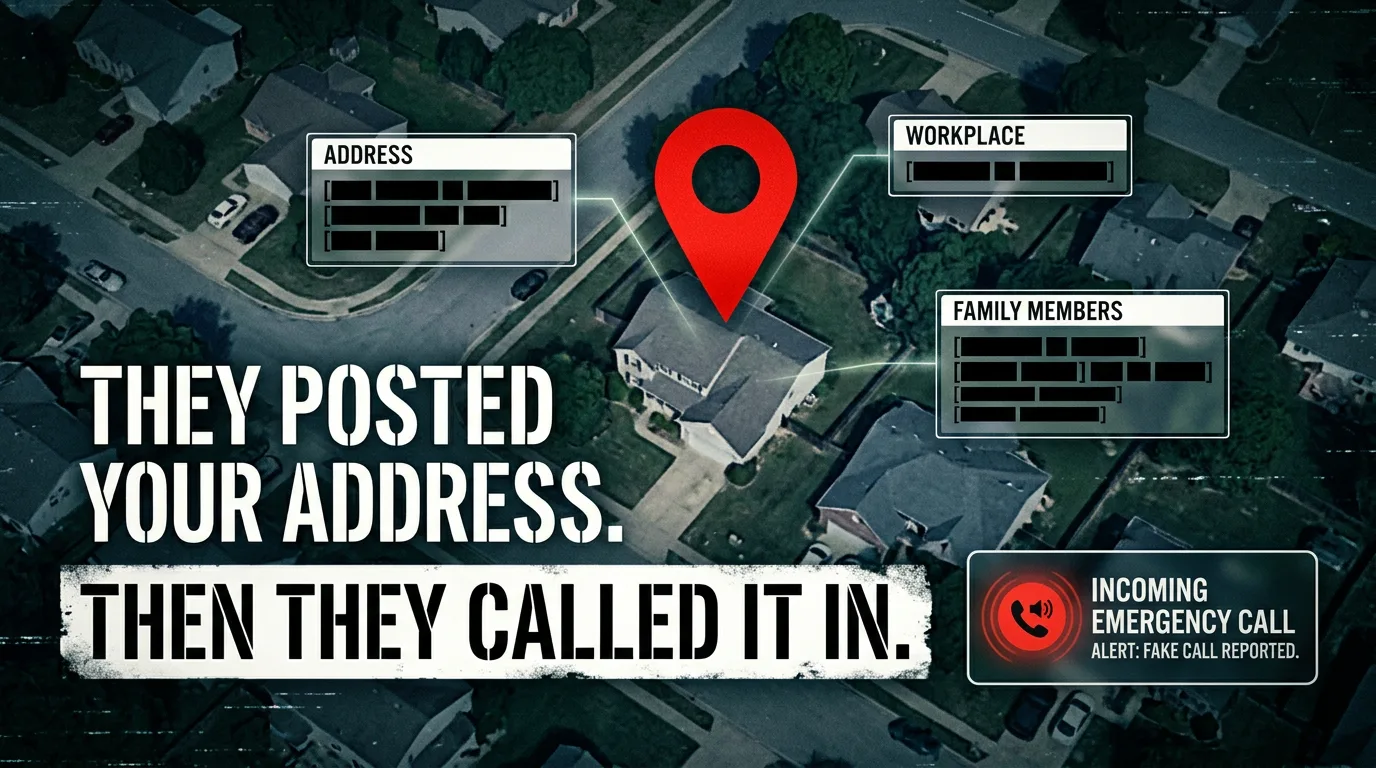
There is a particular terror in watching your own address, your workplace, your family’s names, spread across a screen you cannot control. Doxxing and swatting are designed to make you feel exposed, unsafe, and alone. They are not debates. They are punishments for leaving, for speaking, for refusing to come back.
If this is happening to you, the fear is real. So is the exhaustion. This guide is for the moment after that.
What this is
Doxxing is often organized: a person or group collects your information from public records, social media, data breaches, or people who know you, then spreads it widely. The audience may be asked to harass you, contact your employer, or show up where you live.
Swatting is a specific and dangerous form of harassment. The caller reports a fake hostage situation, shooting, or bomb threat at your address. The result is a heavily armed police response, which can injure or kill you, your family, or your pets. In 2017, a swatting call made over a $1.50 dispute between two Call of Duty players got an uninvolved man, Andrew Finch, fatally shot by police at an address the caller had never confirmed belonged to anyone connected to the argument. The caller was sentenced to 20 years in federal prison — the danger is not hypothetical, and it does not require the caller to know or care who actually lives at the address.
How it is used against you
- Punishment for leaving. A group or individual publishes your information to retaliate after you spoke out, left, or refused to return.
- Silencing. The threat of doxxing keeps people from reporting abuse, sharing their story, or seeking help.
- Isolation. Employers, neighbors, or family members are contacted with lies or pressure, cutting off your support network.
- Physical danger. Swatting and stalking can follow doxxing, turning online exposure into a real-world threat.
What to watch for
- Someone mentions details about you that they should not know: your address, schedule, family members, or workplace.
- You receive threats that your information will be shared if you do not comply.
- Your personal information appears on a website, forum, or social media thread encouraging harassment.
- Police or emergency services arrive at your home based on a report you did not make.
What to do now
- Document everything. Screenshot the posts, URLs, and usernames. Save timestamps. This is evidence, not paranoia.
- Report the platform. Most platforms and web hosts prohibit doxxing and threats. Use their reporting tools and keep records of your reports.
- Lock down your information. Remove your address from people-search sites, set social media to private, and ask friends not to tag your location.
- File a police report. Doxxing and swatting are crimes in many jurisdictions. A report creates a record, even if immediate action is limited.
- Alert local police if you are at risk of swatting. Some police departments will flag your address so officers know the call may be false. Contact your local non-emergency line to ask.
- Use a safer address. If possible, receive mail at a P.O. box or a trusted person’s address. Do not list your home address on public documents.
- Tell trusted people. Let neighbors, employers, and close contacts know you are being targeted so they do not amplify the attack or act on false information.
When to get help
Doxxing and swatting can escalate quickly. If you are being threatened, if your home address is public, or if emergency services have been sent to your home, contact law enforcement and a local advocate immediately. Organizations that specialize in cyber civil rights and domestic violence can help you create a safety plan.