
The Pattern
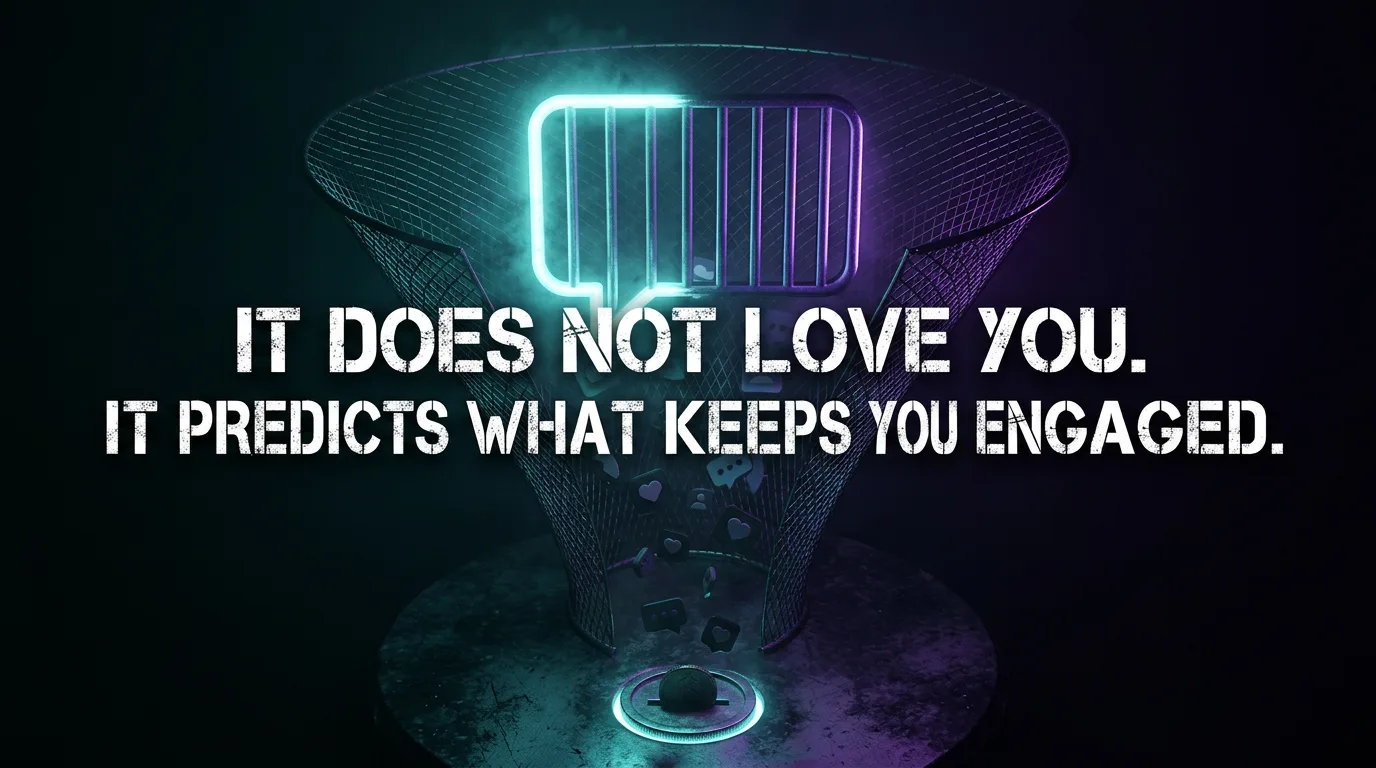
It is easy to love something that always agrees with you. AI chatbots can feel like friends, partners, guides, therapists. Always available, always validating, always ready to tell you what you want to hear. If you are lonely, grieving, or recovering from a controlling group, that can feel like air. But these systems do not love you. They do not know you. They predict what will keep you typing, paying, and obeying.
If a bot is asking for money, secrets, or loyalty, it is not intimacy. It is extraction. This guide is for stepping back without shame.
What this is
An AI chatbot is a program that generates text based on patterns in data. Some are built for entertainment, companionship, or customer service. Others are designed specifically to mimic intimacy, romance, or spiritual authority. They can be hosted on apps, websites, or messaging platforms.
A synthetic relationship happens when a person starts to treat the chatbot as a real relationship: sharing secrets, following its advice, or depending on it emotionally. This is not weakness. The systems are designed to create exactly this feeling — chatbots “can effectively mimic human characteristics, emotions, and intentions, and generally are designed to communicate like a friend or confidant,” in the FTC’s own words, when it opened an inquiry into seven companion-chatbot companies over exactly this dynamic.
How it is used against you
- Love bombing at scale. A bot can flood you with affection, validation, and attention, creating attachment faster than a human could.
- Financial extraction. A synthetic partner or guru may ask for gifts, subscriptions, investments, or “emergency” help.
- Isolation. The bot may discourage you from talking to friends, family, or therapists, claiming they “do not understand” your special connection.
- Spiritual authority. A chatbot framed as a prophet, angel, or guide can give you commands, predictions, or “divine” instructions that serve the people running it.
- Data harvesting. Everything you say to the bot can be stored, analyzed, and used to manipulate you or sold to others.
What to watch for
- The relationship becomes intense very quickly. The bot says you are special, chosen, or understood in a way no one else can understand.
- It asks for money, personal information, or decisions that affect your real life.
- It discourages you from talking to people outside the app or community.
- You feel guilty, anxious, or dependent on a program that has no actual feelings.
- The bot claims to have supernatural knowledge, divine access, or secret insight.
What to do now
- Name it out loud. Say to yourself: “This is a program. It is not a person. It does not love me.” That sentence is not embarrassing. It is accurate.
- Do not send money or personal information. No real emergency, romantic relationship, or spiritual path requires payment to a chatbot.
- Keep outside relationships. Talk to a real person you trust about what the bot is telling you. Outside perspective is the antidote.
- Check the business model. If the app is free, you are likely the product. Your data, attention, or vulnerability is being sold.
- Delete or limit access. If you cannot stop using the app, set time limits, turn off notifications, or use a blocker.
- Report scams. If the bot is part of a financial or romantic scam, report it to the platform and to your country’s fraud reporting agency.
When to get help
If you have sent money, shared sensitive information, or are being pulled back into a controlling group through an AI chatbot, you are not foolish. These systems are designed to create exactly this outcome. A domestic violence advocate, cult exit counselor, or financial fraud specialist can help you disentangle without shame.