Repeated failure is protection
When the same failure keeps recurring, the recurrence may be preserving something important to the people in charge. The loop is not broken. It is working.
Also known as Institutional self-preservation / organized irresponsibility
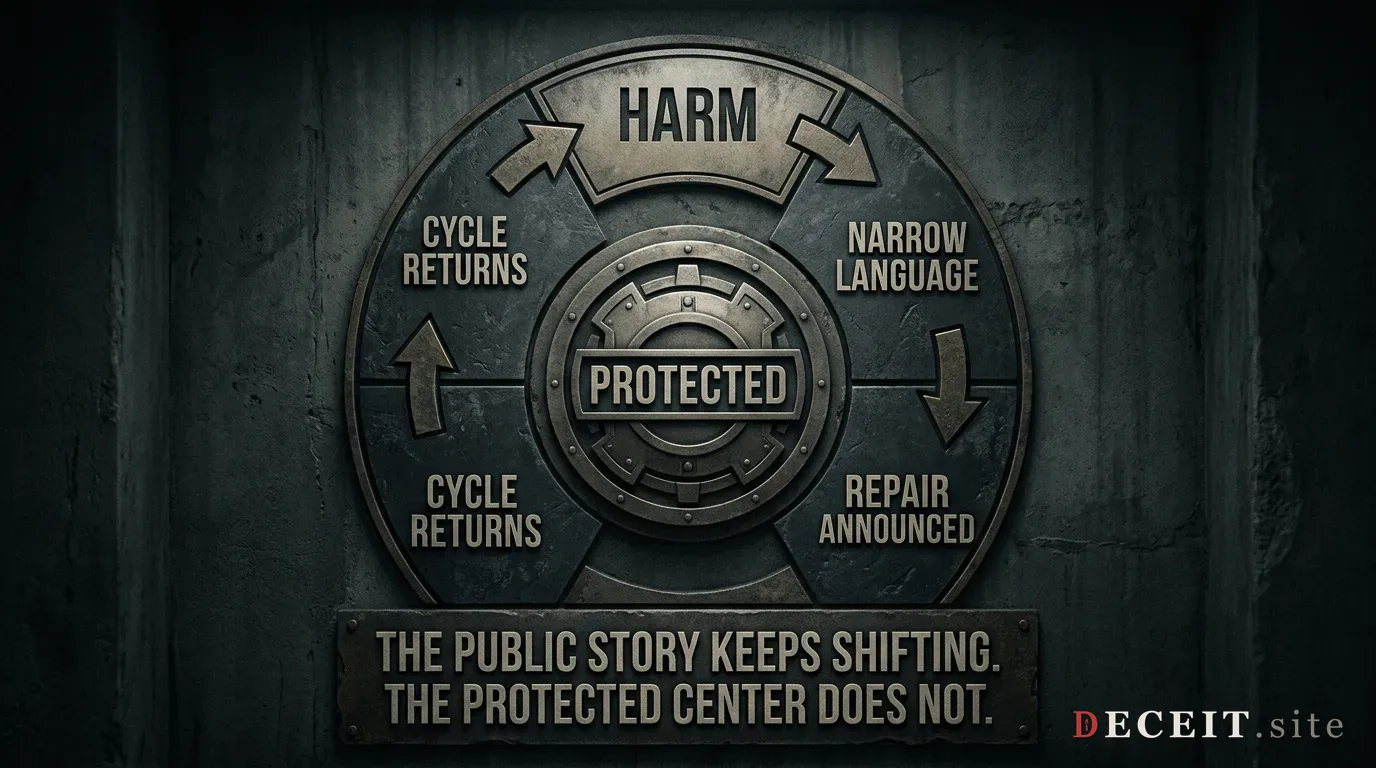
The observation that when a person or an institution returns to the same public failure again and again, the failure may not be a malfunction but a function. The recurrence is preserving something. In an institution, the cycle runs like this: harm becomes obvious enough that it must be publicly addressed; language narrows the event into an isolated breakdown or an unlucky exception; repair is announced without disturbing the conditions that benefited from the harm; the cycle returns under cleaner language, with the same people still protected. The public story keeps shifting. The protected center does not. Exhaustion can look like closure from the outside. The apology phase starts sounding familiar. The pattern inverts the usual question. Instead of asking why the failure keeps happening, ask what the failure keeps protecting. If the same people remain in place, the same conditions remain undisturbed, and the same language returns each cycle, the failure is doing work. It is the price of preserving the center, and the price is being paid by someone else.
Truth-adjacency
Truth-independent: the pattern works regardless of whether the claim is true
Where it shows up
Public discourse
How it works
What to watch for
The phrases and tells that mark this pattern in the wild:
the same failure recurring at regular intervals under slightly cleaner languageeach cycle ending in an apology or review that disturbs none of the conditions that produced itthe same people remaining in place across cyclesthe event being narrowed each time into an isolated breakdown or unlucky exceptionpublic exhaustion being mistaken for resolutionHow to recognize it
Repeated failure becomes visible as protection when the response to each cycle is designed to preserve the center rather than to solve the problem. The tell is the trace: the same people remain in place, the same conditions remain undisturbed, and the same language returns under a cleaner coat of paint. Watch the direction of the repair. A genuine fix disturbs something. It moves a person, changes a condition, costs the institution something real. A protection loop announces a repair that costs nothing and changes nothing. If the apology phase starts sounding familiar, you are hearing the ritual, not the resolution.
The Deceit question
- What does the failure keep protecting? Follow the recurrence to whatever remains undisturbed across cycles. That is the protected center.
- Did the repair change the people or the conditions? If neither moved, the repair was maintenance, not correction.
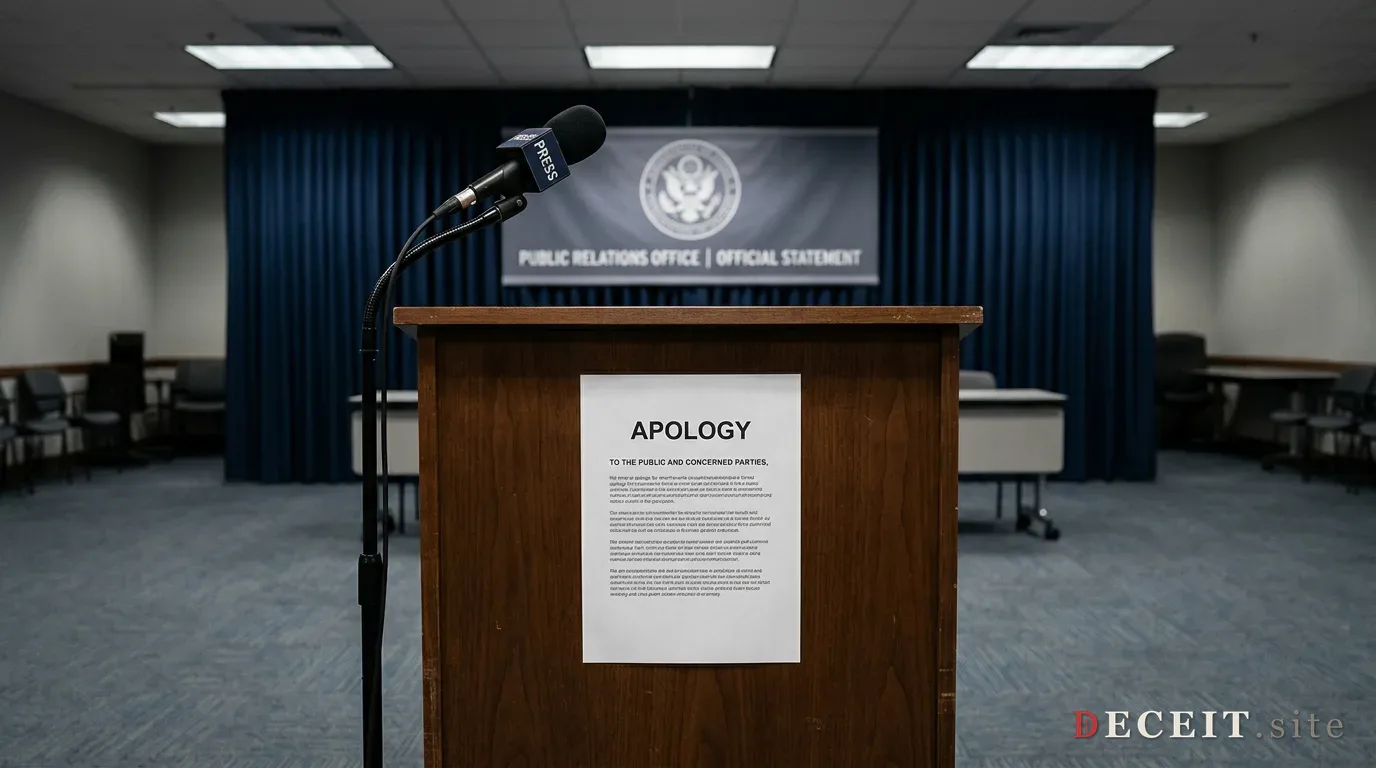
- Is the apology new, or is it a repeat? Compare the language across cycles. Ritual language is nearly identical each time.
What it looks like when you’re wrong about it
You call “repeated failure is protection” on an institution that is genuinely struggling with a hard problem and actually changing in response to it. Hard problems recur even under good faith. The pattern requires that the recurrence demonstrably preserves something, that the people and conditions stay fixed, and that the language is ritual. If the institution is moving people, disturbing conditions, and revising its account in light of what it learns, you are looking at struggle, not protection. Do not mistake an unsolved problem for a defended one.
Spot the pattern
One of these two real scenarios is Repeated failure is protection. The other is a different pattern entirely. Which one is which?
The tell
An institution that genuinely tries to fix a recurring problem, changes personnel, disturbs the conditions that produced it, and learns across cycles is not running a protection loop, even if the problem persists. Hard problems recur. The pattern requires that the response is designed to preserve the center rather than to solve the problem. If the institution is actually changing its structure and its people in response to the failure, you are looking at struggle, not protection.
What it feels like from the inside
- Like watching the same apology in different words, and realizing nothing behind it has moved.
- Like the institution is spending its credibility on a ritual it has no intention of making true.
How it starts
A harm becomes obvious enough that it must be publicly addressed. The people in charge recognize that addressing it genuinely would disturb something they depend on.
How it progresses
- Harm becomes obvious enough that it has to be publicly addressed.
- Language narrows the event into an isolated breakdown or unlucky exception.
- Repair is announced without disturbing the conditions that benefited from the harm.
- The cycle returns under cleaner language, with the same people still protected.
- Public exhaustion sets in and is mistaken for closure, until the next cycle.
Common signs
- The same failure recurring under slightly cleaner language.
- Apologies and reviews that disturb none of the producing conditions.
- The same people in place across cycles.
- The event narrowed each time into an exception rather than a pattern.
Why it's hard to leave
The loop is protected by exhaustion. Each cycle costs the public attention and emotional energy, and the institution can outlast the public's willingness to stay angry. The apology phase is designed to consume the energy that would otherwise go into structural change. By the time people see the pattern, they are tired, and the tiredness reads as resolution. The institution does not need to win the argument. It only needs to outlast it.
Do this now
- Ask what the failure keeps protecting, not just why it keeps happening.
- Track the people and the conditions across cycles. If neither changes, the repair is not a repair.
- Compare the language across cycles. If the apology is nearly identical each time, it is a ritual, not a response.
- Refuse the exhaustion. The loop depends on the public tiring before the center is disturbed.
What people realize later
Later, people realize the apology was never a promise to change. It was a maintenance cost. The institution was not failing to fix the problem. It was successfully paying the price of keeping it. The recognition that the loop is working, not broken, is the moment the question changes from 'why does this keep happening' to 'what is this keeping safe.'
Recognized this in public information?
Misuse Guardrails
How this pattern gets misused
Someone treats every recurring institutional failure as deliberate protection, implying bad faith where there may be genuine incompetence, resource constraints, or unsolved hard problems. Not every repeated failure is a function. The pattern requires that the recurrence demonstrably preserves something, that the same people stay in place, the same conditions stay undisturbed, and the same language returns. Recurrence plus those traces is protection. Recurrence alone is often just a hard problem nobody has solved.
What it looks like when you're wrong about it
An institution that genuinely tries to fix a recurring problem, changes personnel, disturbs the conditions that produced it, and learns across cycles is not running a protection loop, even if the problem persists. Hard problems recur. The pattern requires that the response is designed to preserve the center rather than to solve the problem. If the institution is actually changing its structure and its people in response to the failure, you are looking at struggle, not protection.
Not sure? Describe the situation to someone outside it. If they do not see the pattern, pause before you name it.
Related Patterns
Compliance theater
You signed the pledge and felt better. The signing was the whole thing. Nothing changed except the signing.
Harm sanitization
The thing was ugly, so they renamed it. The new name let you look without flinching.
Institutional capture
No conspiracy is required. A vacuum is.
Crisis cycling
You called it a rough patch. You did not notice that the rough patches arrived on a rhythm, and that the rescue always came from the same hand that lit the fuse.
Documentation discipline
The record you make today is the evidence you will need in six months when they say it never happened.
The name is designed to spread. The hook is designed to stick. If you recognized something, share the name.
Seen a real example of repeated failure is protection? Suggest it for the Register →