
The loop that protects itself
Evidence-first pattern recognition. Sourced to reputable reporting.
The Pattern
When the same failure keeps recurring (in a person or an institution) the recurrence may be preserving something important to the people in charge. The loop is not broken. It is working.
The individual loop
Compulsion often arrives with a story already loaded. The act matters, but the permission script that escorts it in matters too.
- Pressure builds and memory starts being edited in real time.
- A permission story appears: just this once, not that bad, after today it stops.
- The act lands and the story mutates into shame, inevitability, or forgetting.
- Recognition usually arrives late, after the same script has run enough times to become visible.
The script often sounds calmer than the harm it is about to authorize. People frequently remember the feeling of inevitability more strongly than the exact words that produced it. Recovery starts changing once the story is caught before it earns the act.
The institutional loop
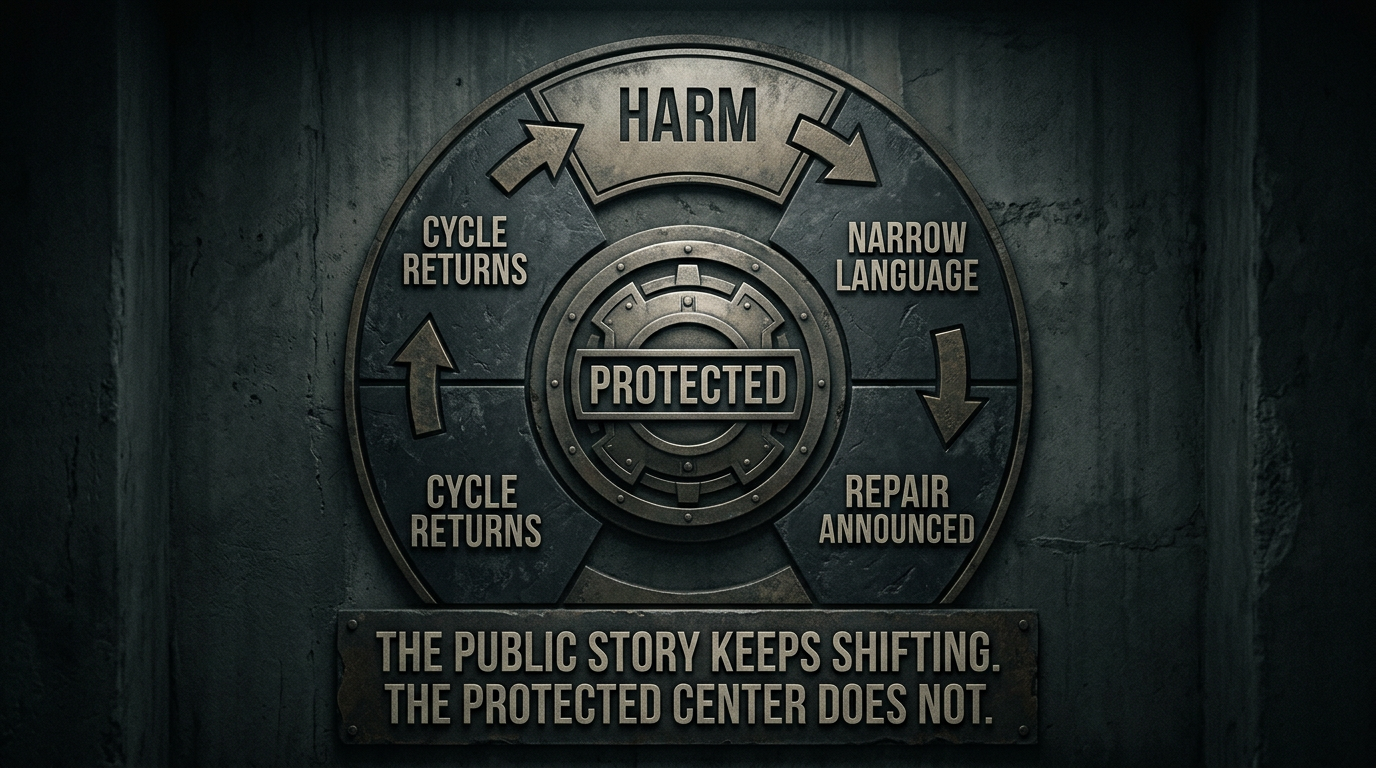
When the same institution keeps returning to the same public failure, the failure may be preserving something important to the people in charge.
- Harm becomes obvious enough that it has to be publicly addressed.
- Language narrows the event into an isolated breakdown or unlucky exception.
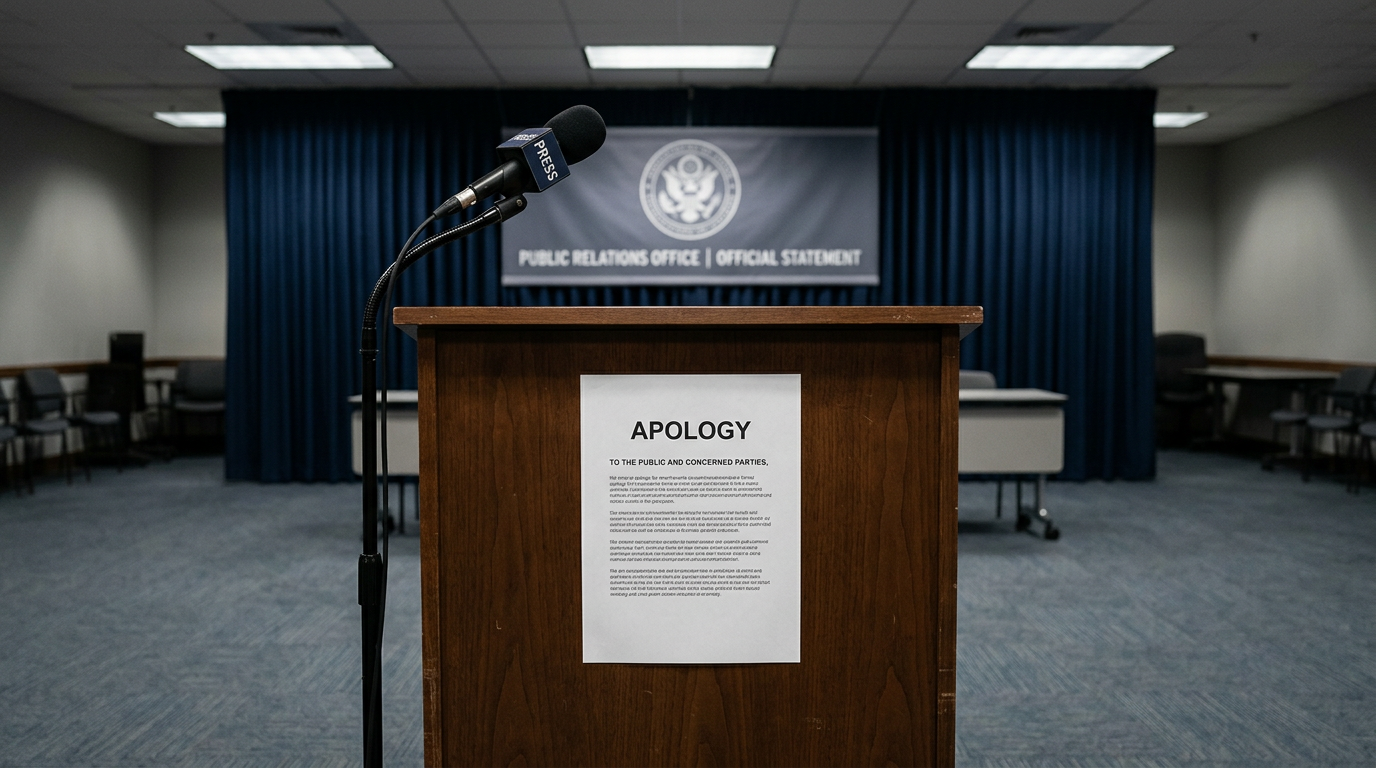
- Repair gets announced without disturbing the conditions that benefited from the harm.
- The cycle returns under cleaner language, with the same people still protected.
The public story keeps shifting. The protected center does not. Exhaustion can look like closure from the outside. People often recognize the pattern only after the apology phase starts sounding familiar too.
What connects them
Both loops survive because the explanation is more available than the evidence. The permission story in the individual loop and the institutional apology in the structural loop do the same work: they make repetition sound temporary, manageable, or deserved, right before the cycle closes again.
Recognition does not end either loop by itself. But it changes what the loop can claim. Once the script is visible, it loses the ability to sound like an accident.
Support
- The blog home carries the longer explanation and search-ready context.
- The pattern page explains why recurring emergency language can block accountability.
- The framework page explains what tends to shift after recognition finally sticks.